How Web D School Trains You to Think, Not Just Execute
Web D School | Expert Economy
Most creative courses teach you how to use tools.
Photoshop. Figma. After Effects. Meta Ads Manager. The list changes every few years, but the approach stays the same – here is the software, here is how it works, now go build a portfolio.
That model made sense ten years ago. Knowing tools was rare. Being fluent in Figma was a genuine differentiator.
It is not anymore.
Today, tools are accessible to everyone. Tutorials are free. AI can produce in minutes what used to take hours. The bar for “I can do the work” has dropped so low that skill alone no longer separates anyone.
What separates people now is thinking. And thinking is not something most institutes know how to teach.
At Web D School, it is the only thing we are actually trying to build.
We Start With the Problem, Not the Tool
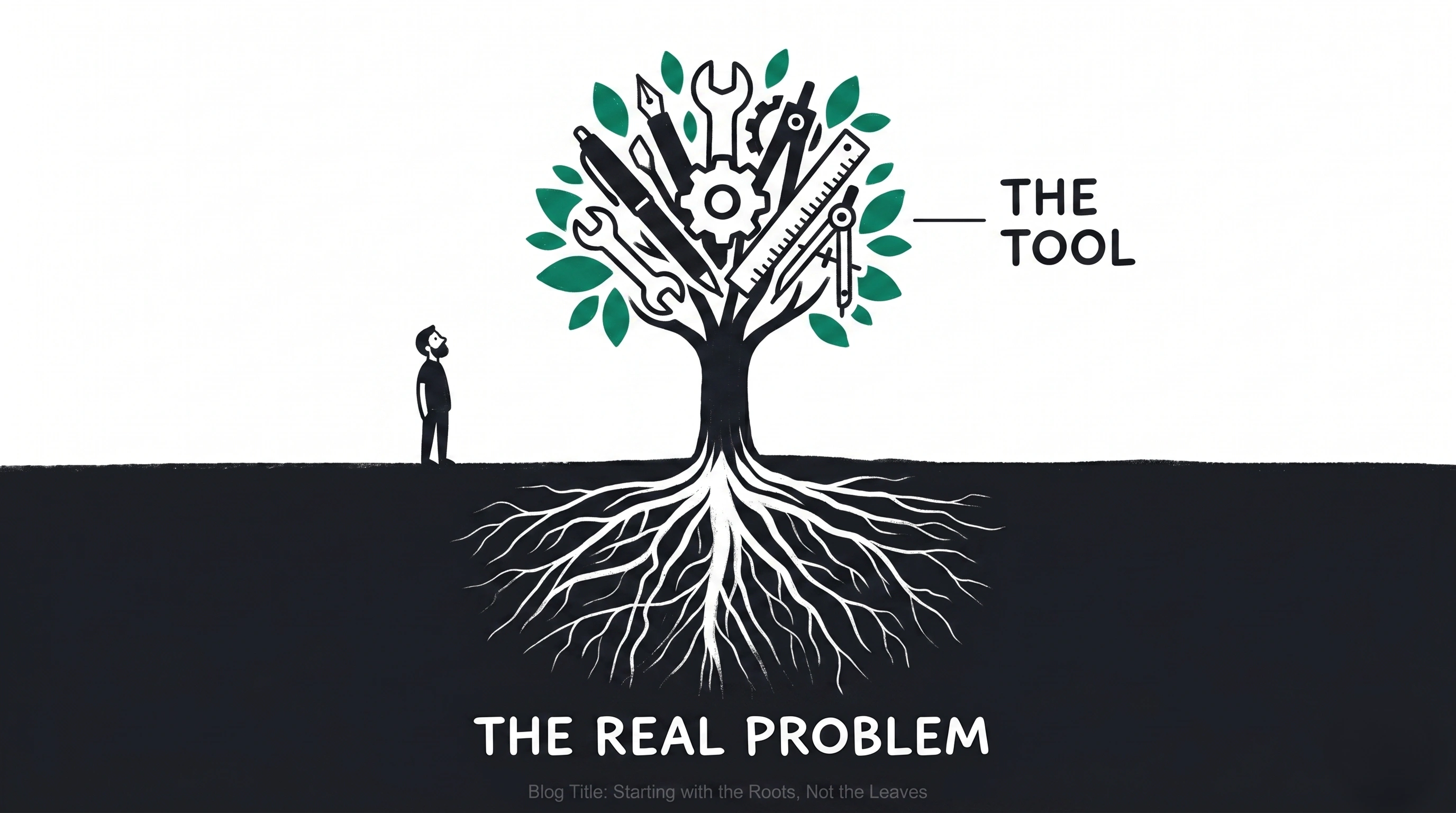
Every course at WDS begins the same way – not with software, but with a question.
Why does this business exist? Who is it trying to reach? What does that person actually need to feel before they take action? What is getting in the way?
Students learn to define a problem clearly before they touch any tool. This sounds simple. In practice, it is the hardest thing to teach – because most people are trained from school onwards to jump straight to the answer, skip the thinking, and produce something fast.
We slow that down deliberately. We make students sit with the problem. Ask better questions. Challenge the brief. Understand the business behind the task.
By the time they open Figma or launch a campaign, they know exactly what they are trying to achieve. That changes everything about the quality of the output – and more importantly, the quality of the person producing it.
The BRIDGE Framework – Thinking Before Creating
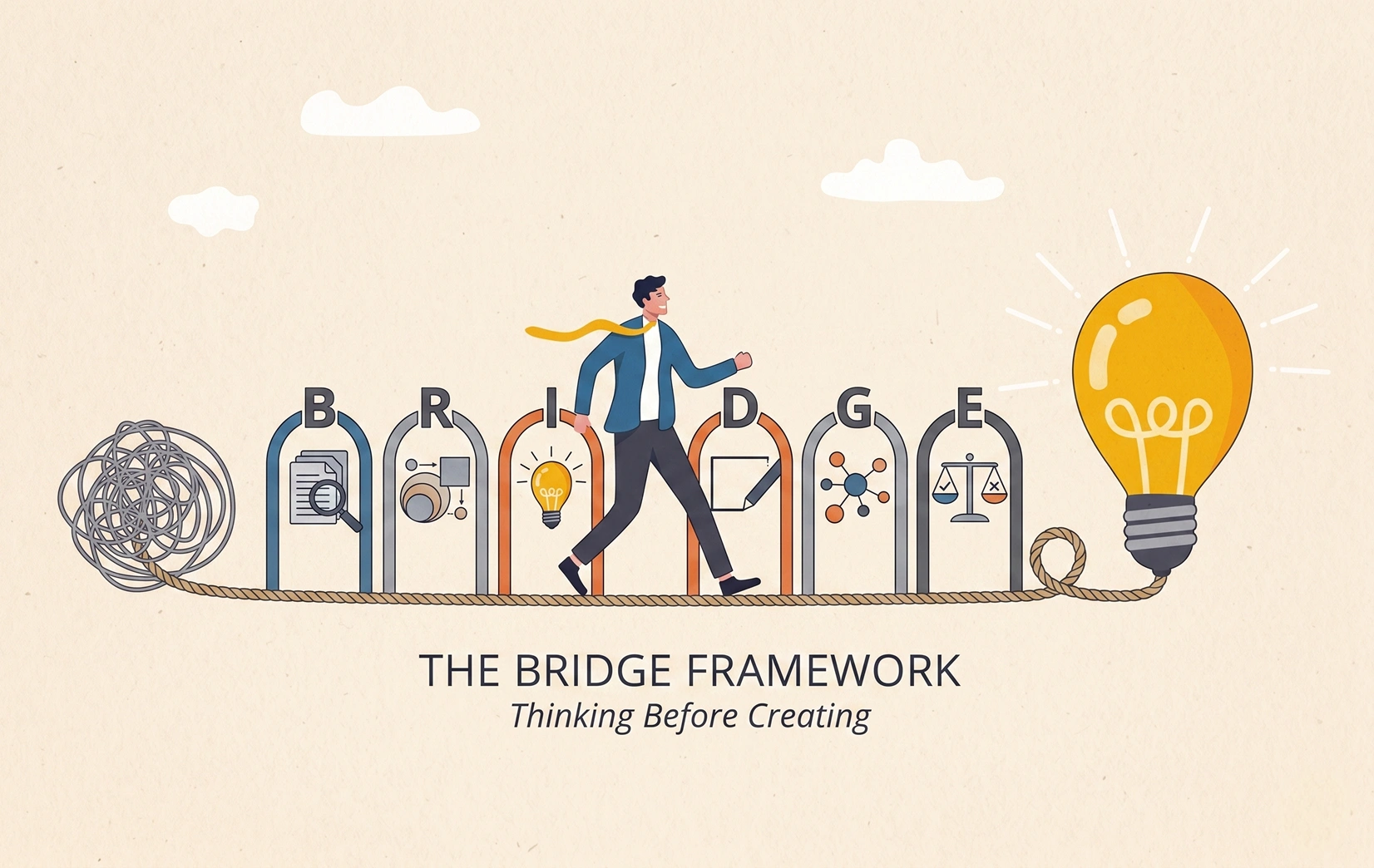
The core of how we teach thinking at WDS is the BRIDGE Framework.
BRIDGE is not a checklist. It is not a process to follow blindly. It is a way of looking at any creative problem from the right angle before deciding what to make.
Before any creative work begins, BRIDGE asks six questions:
Is the message clear enough that someone understands it in five seconds? Is this solving the right problem for the right audience? Does this make the customer feel confident and seen? Does this support the full customer journey – not just one moment in it? Is this memorable, or just competent? And will this still work as the brand grows and the market shifts?
These are not design questions. They are not marketing questions. They are business questions. And a creative professional who can answer them before picking up a tool is operating at a completely different level from one who cannot.
Every project at WDS goes through this lens. Not because it is mandatory. Because over time, students start to see that the work which comes out of this thinking is genuinely better. It solves real problems. It gets real results. And that is when the framework stops being a class exercise and starts becoming a professional habit.
Where the Thinking Gets Tested – Vinci Studio
There is a gap in most creative education that nobody talks about honestly.
Students spend months doing assignments. Then they step into their first job or first client meeting – and realise that real briefs are nothing like assignments. Real clients do not always have clear goals. Real businesses have messy problems. Real work requires judgment, not just execution.
Most graduates hit this wall in their first three to six months and struggle to cross it.
At WDS, we close this gap through Vinci Studio – our in-house studio that operates inside our LMS as a dedicated project environment. Students receive briefs the way professionals do – not as classroom exercises, but as studio-style project assignments with real context, real constraints, and a clear outcome to work toward.
Each Vinci Studio brief is structured to push students beyond the deliverable. The brief does not just say “design a landing page.” It gives you the business, the audience, the problem, and asks you to justify every decision you make. You work through it the way a professional would – thinking first, creating second.
This is where BRIDGE stops being theory and becomes practice. Students who have worked through ten Vinci Studio briefs do not enter their first job nervous about whether they can handle real work. They have already done it.
We Teach You to Talk About Your Thinking

Here is something most creative professionals never learn – how to explain why they made the decisions they made.
A designer can show you a beautiful interface. But if they cannot tell you why they made each choice, what problem it solves, and what result it is designed to produce – they are invisible in any room that matters.
In the Expert Economy, the ability to articulate your thinking is as important as the thinking itself. Clients and employers do not just buy the work. They buy confidence in the person behind it.
At WDS, students learn to present their work as a series of decisions – not a collection of outputs. Every project review, every critique session, every portfolio piece is built around one question: why did you make this choice, and what were you trying to achieve?
This practice, repeated across hundreds of projects, builds something that no tool training can produce – the ability to walk into any room, explain your thinking clearly, and be trusted with harder problems.
What You Leave With
When a WDS graduate enters the job market, they carry three things that most other graduates do not.
A thinking system – BRIDGE, that helps them approach any creative problem strategically, not just execute what they are told.
Real project experience – from Vinci Studio, that means their first job is not their first time working under real pressure with real stakes.
The ability to explain their decisions – which means they do not just show work, they earn trust.
The Expert Economy rewards all three. Heavily.
Skills can be learned anywhere. Structured, strategic, outcome-focused thinking – that is what we build at WDS. And in the world your career is entering, that is the only advantage that truly compounds.
Explore the full Expert Economy series:
● What Is the Expert Economy – And Why Every Creative Professional in India Needs to Understand It
● 10 Things About the Expert Economy Every Aspiring Creative Professional Must Know
Web D School is an Expert Economy institution. We train designers, marketers, and UX professionals to think strategically – through the BRIDGE Framework, live studio experience, and a curriculum built for the world as it is, not as it was.
Available on campus in Chennai and online across India.