10 Things About the Expert Economy Every Aspiring Creative Professional in India Must Know
Web D School | Expert Economy
Nobody sat you down and explained this when you started learning design or marketing or development.
They taught you the tools. They showed you the software. They gave you projects to complete and portfolios to build.
What they did not tell you is that the industry you are entering has fundamentally changed – and the rules for building a career that lasts are different from what most courses are still teaching.
Here are ten things every aspiring creative professional in India needs to understand before stepping into the job market.
1. The Job Market Does Not Reward Skill Anymore. It Rewards Judgment.
Skill gets you in the room. Judgment keeps you there.
Every company you interview with has access to skilled designers, marketers, and developers. What they cannot easily find is someone who can look at a problem, think clearly, and know what to do.
That gap – between execution and judgment – is where Expert Economy value lives. Build skill, yes. But never stop there.
2. AI Is Not Your Competition. Shallow Thinking Is.
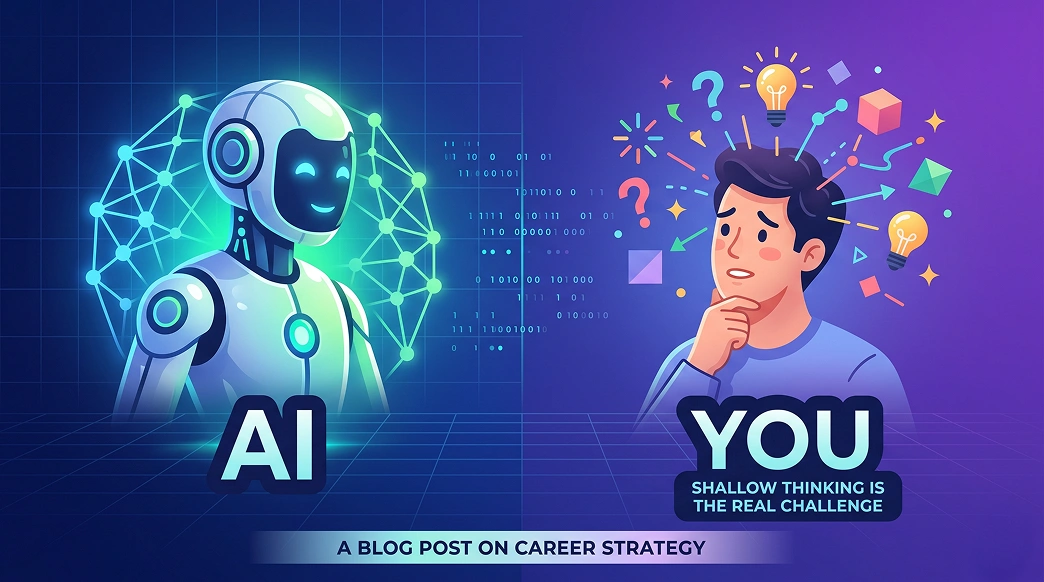
Every conversation about AI ends with the same fear: will it take my job? Wrong question.
AI is already doing the work of shallow executors – generating visuals, writing copy, producing basic content. What it cannot do is understand context, navigate ambiguity, or make decisions that require cultural intelligence and genuine business understanding.
The creative professionals AI replaces are those who never developed thinking beyond tool operation. The ones it cannot replace are those who think before they create.
3. Your Portfolio Shows What You Made. It Should Show How You Think.
Most portfolios are graveyards of deliverables.
A logo here. A social media post there. A UI screen. A campaign visual. Beautiful. Forgettable.
What hiring managers and clients in the Expert Economy are looking for is evidence of thinking. Why did you make those decisions? What problem were you solving? What changed because of your work?
A portfolio that answers those questions is not competing with a hundred others. It stands alone.
4. The Brief Is Not the Problem. The Problem Behind the Brief Is.
When a client says “redesign our Instagram” – they are not asking for better graphics. They are asking why their brand is not connecting.
When they say “run better ads” – they are asking why their product is not selling. The brief is the surface. The real problem is underneath it.
Creative professionals who only respond to the surface of a brief stay average. The ones who dig one level deeper become indispensable.
5. India Gives You an Unfair Advantage – If You Use It.
India is not a simple market. It is 22 official languages, multiple generations making decisions together, deep cultural nuance, and a trust economy that operates very differently from the West.
A creative professional who genuinely understands how Indian consumers think, feel, and decide has a career advantage that cannot be replicated by AI or outsourced to a foreign agency.
Zomato did not win because of better technology. Tanishq did not shift perception because of a bigger budget. They won because someone understood people deeply enough to make the right creative call.
That someone could be you.
6. Experience Without Reflection Is Just Repetition.
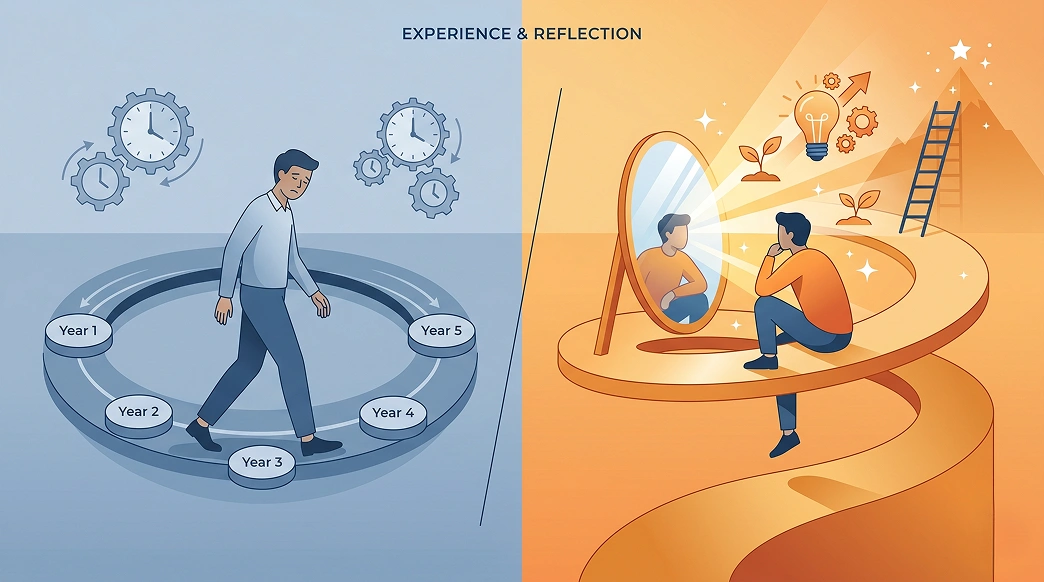
You will meet people with five years of experience who are still doing the same quality of work they did in year one.
Experience does not automatically become expertise. What converts experience into expertise is reflection – asking why something worked, what you would do differently, what pattern you are seeing across multiple projects.
This habit, practised consistently, is what separates professionals who grow from those who plateau.
Build it early. Most people never do.
7. Starting as a Fresher Is Not a Disadvantage. It Might Be an Advantage.

Here is the mistake most freshers make: thinking they need to earn the right to think strategically. That it is something that comes after years of experience, after enough projects, after enough seniority.
That belief keeps people in execution mode for their entire careers.
Strategic thinking is not a reward for the senior. It is a habit of the intentional.
A fresher who asks “what problem are we solving?” before starting any task is already thinking at a level that most two-year professionals never reach. Habits built early grow stronger over time. And bad habits built early are very hard to break.
You do not need permission to think. You just need to start doing it.
8. Clients Do Not Pay for Hours. They Pay for Outcomes.
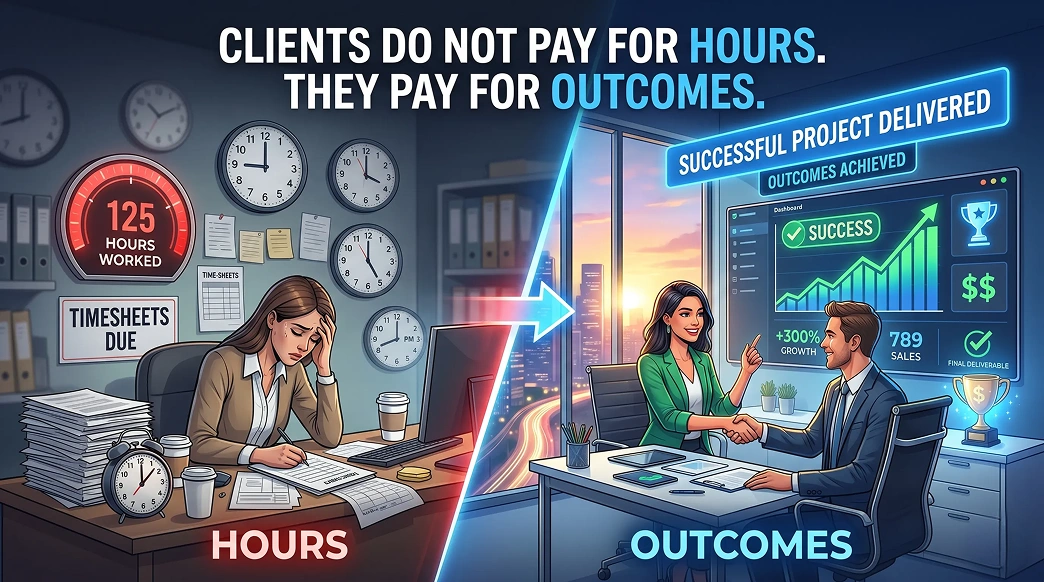
The moment you start charging by the hour or the deliverable, you have entered a race you cannot win.
There will always be someone cheaper. There will always be AI that is faster.
But a professional who can be trusted to deliver a specific outcome – more conversions, stronger brand recall, better user retention – commands a completely different kind of conversation.
Move from “what do you need made?” to “what are you trying to achieve?” as fast as you can. That single shift changes your career trajectory.
9. The Market Is Not Shrinking. The Bar Is Rising.
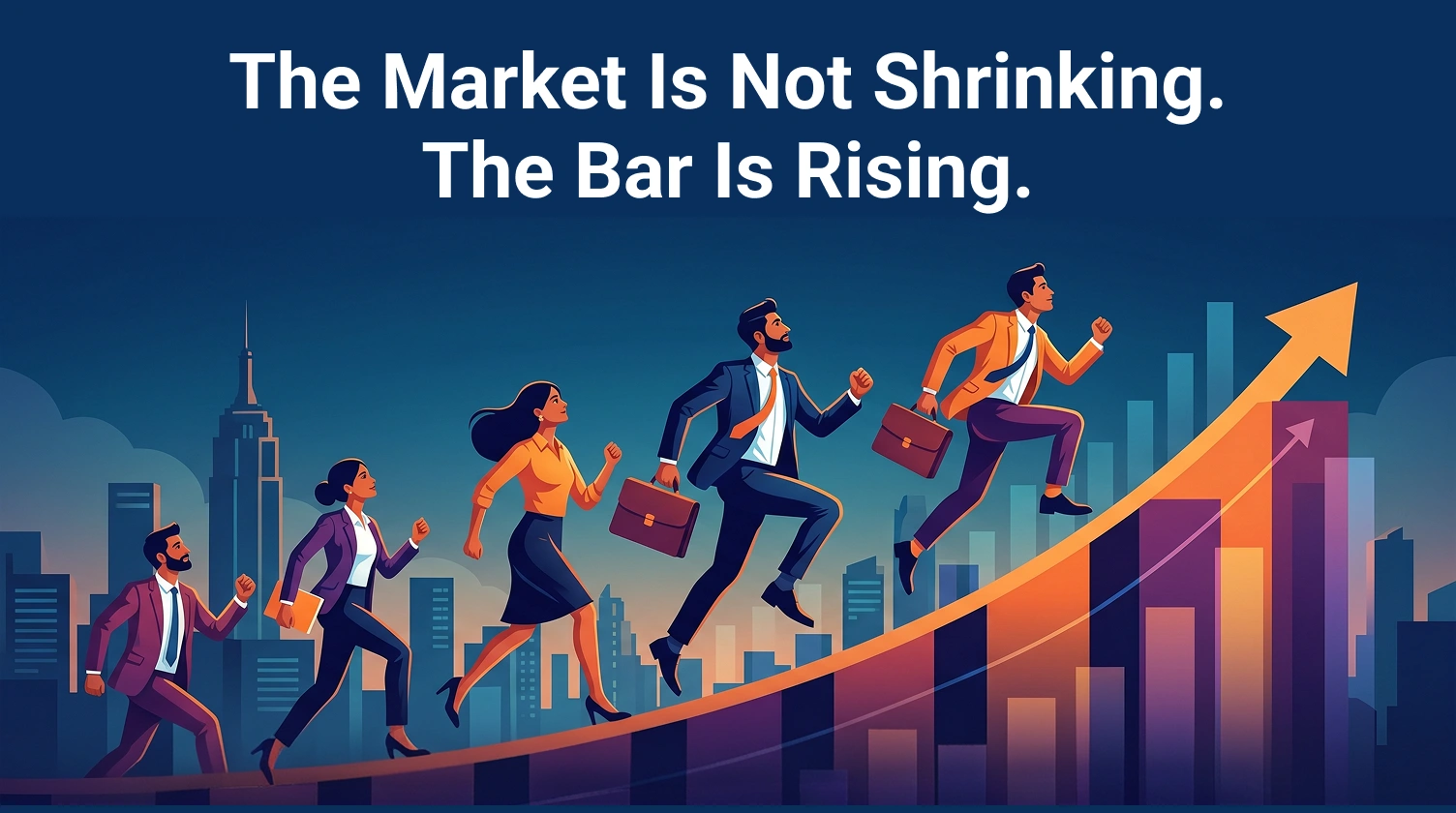
India’s creative industry is growing. Demand for designers, marketers, developers, and UX professionals is not declining.
What is declining is tolerance for mediocre work. Companies are becoming more sophisticated. Clients are better informed.
The days of getting away with average output because the client did not know better are ending. This is not a bad time to be a creative professional. It is a bad time to be a mediocre one.
10. The Thinking Comes Before the Tool. Always.
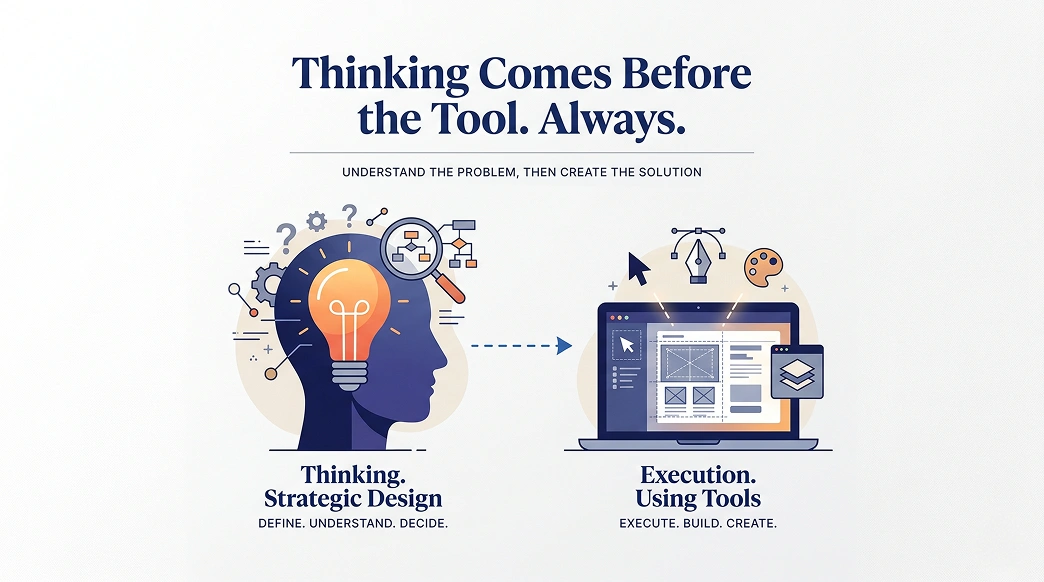
Every mistake in creative work – the campaign that did not convert, the design that confused users, the brand that did not connect – can be traced back to one thing: someone opened the tool before they understood the problem.
This is the single most important habit you can build as an aspiring creative professional.
Before you open Figma, define the user’s pain. Before you launch an ad, understand why the current one is not working. Before you design the poster, ask what it needs to make someone feel.
Tools execute. Thinking decides.
And in the Expert Economy, the one who decides is always more valuable than the one who executes.
One More Thing – About the Work You Are Already Doing
Even if you are at the beginning of your career, you can start acting like a strategic partner right now. Not in title. In habit.
Before every task, ask one question: “What should someone feel or do after they encounter this?”
That question moves your thinking from deliverable to outcome. You do not need seniority to ask it. And when you do – when you ask a thoughtful question about the goal before diving into a task – something changes in how you are seen.
You stop being “the designer they hired.” You start becoming “the person who actually gets it.”
That shift in perception happens faster than most people expect. Not because you have done years of impressive work, but because you showed, in one simple moment, that you think beyond the task in front of you.
The Expert Economy does not have an age requirement. It rewards clarity of thinking – at any level, from day one.
Explore the full Expert Economy series:
● What Is the Expert Economy – And Why Every Creative Professional in India Needs to Understand It
● How Web D School Trains You to Think, Not Just Execute
Web D School prepares creative professionals for the Expert Economy through the BRIDGE Framework – a structured thinking system that turns aspiring creatives into strategic professionals the industry cannot ignore.
Available on campus in Chennai and online across India.