
From Executor to Strategic Thinker: How BRIDGE Helps Creative Professionals Stand Out
At some point in every creative career, there is a moment of quiet frustration.
You are doing good work. You meet deadlines. Clients are reasonably happy. Your skills have improved significantly from where you started.
But something feels off.
You are not being consulted – only briefed. You are not in the rooms where decisions are made. You are delivering files, not shaping outcomes. And somewhere in the back of your mind, you suspect that the professionals moving ahead faster are not necessarily more talented than you.
You are probably right.
The gap between those who stay stuck and those who break through is rarely about skill. It is almost always about the layer they operate from.
Two Professionals. Same City. Different Trajectories.
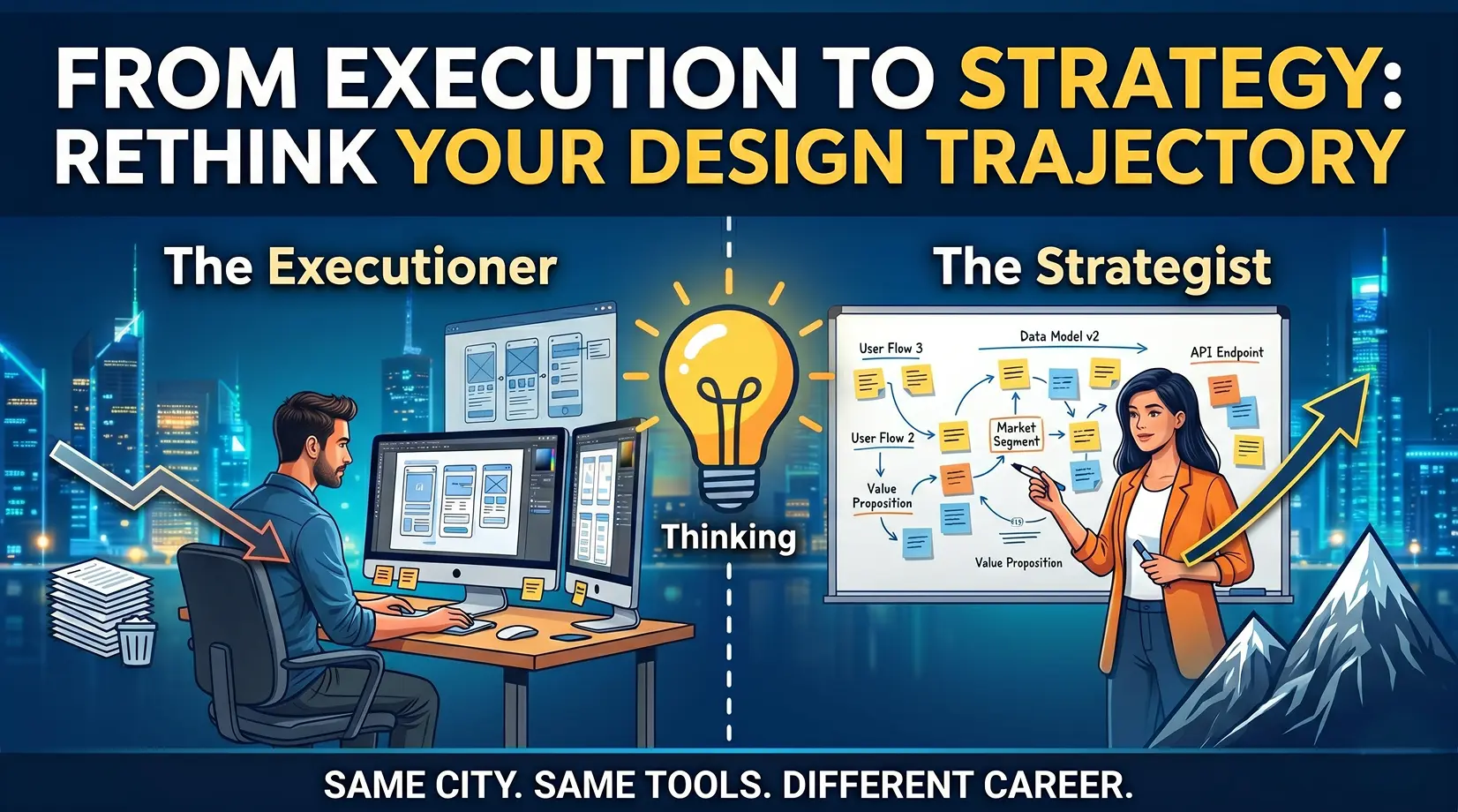
Picture two designers working in the same city, in the same industry, with roughly the same technical ability.
The first receives a brief, opens the software, produces strong work, revises when asked, and delivers on time. Every project. He is reliable, professional, and skilled. He is also, quietly, replaceable – because what he offers is execution, and execution is no longer scarce.
The second does something different before touching any software. She asks questions that the brief did not raise. What is this campaign actually trying to achieve? What does the audience currently believe about this brand? Where in the customer journey does this piece of work belong? Is the brief solving the right problem – or is there a deeper issue being papered over?
She is invited into strategy conversations. She raises her fees. She is not just delivering work – she is shaping how problems get defined before solutions are built.
Same city. Same tools. Same starting point. Completely different career.
The difference is not talent. It is the habit of thinking before executing.
The Execution Layer and Why It Has a Ceiling
For most of creative history, execution was the differentiator. If you could design better, edit faster, or write more clearly than most people, you had genuine value that was hard to find.
That is no longer true.
AI tools today can generate a logo in seconds, write campaign copy in minutes, and produce a month of social content in an afternoon. What once took years of learning now takes a subscription. Execution is not disappearing – but it is becoming a commodity.
In a commodity market, there is only one direction prices move: down. Faster. Cheaper. More. The professional who competes purely on execution is competing in a race that gets harder every year – and the finish line keeps moving.
The professionals building strong careers today are not the fastest executors. They are the clearest thinkers. They ask questions the brief does not raise. They see problems the client has not named. They connect creative decisions to business outcomes – and they can explain that connection in a room full of people who control budgets.
That is the Strategic Layer. And operating from it is not a personality trait or a natural gift. It is a learnable habit.
What Strategic Thinking Actually Looks Like in Practice
Strategic thinking sounds abstract until you see it in a specific moment.
Situation Executor Strategic Thinker
Brief for a landing page arrives
Feedback says “make it pop”
Starts thinking about layout, colours,
buttons, sections
Tries brighter colours, bolder typography, stronger visuals
Asks: why are visitors dropping off? Do they trust the offer? Is the message clear? Are we targeting the right audience?
Asks: “What feeling are we actually trying to create – and for whom?”
The campaign is underperforming. “What font should I use?”
Revises the creative Asks: “Are we solving the right problem, or just improving the wrong thing?”
“Try Helvetica.” “What does this brand need to signal? What does it communicate about the customer who
uses it? Pick the font that matches that signal.”
Same brief. Completely different starting point.
And over time, the person who thinks this way stops needing to ask at all – because the habit of diagnosis is built into how they approach every project.
Strategic thinking is not about having opinions in meetings. It is about asking the right questions before the work begins – and defending every creative decision on strategic grounds, not just aesthetic ones.
The Four Habits of Strategic Thinkers
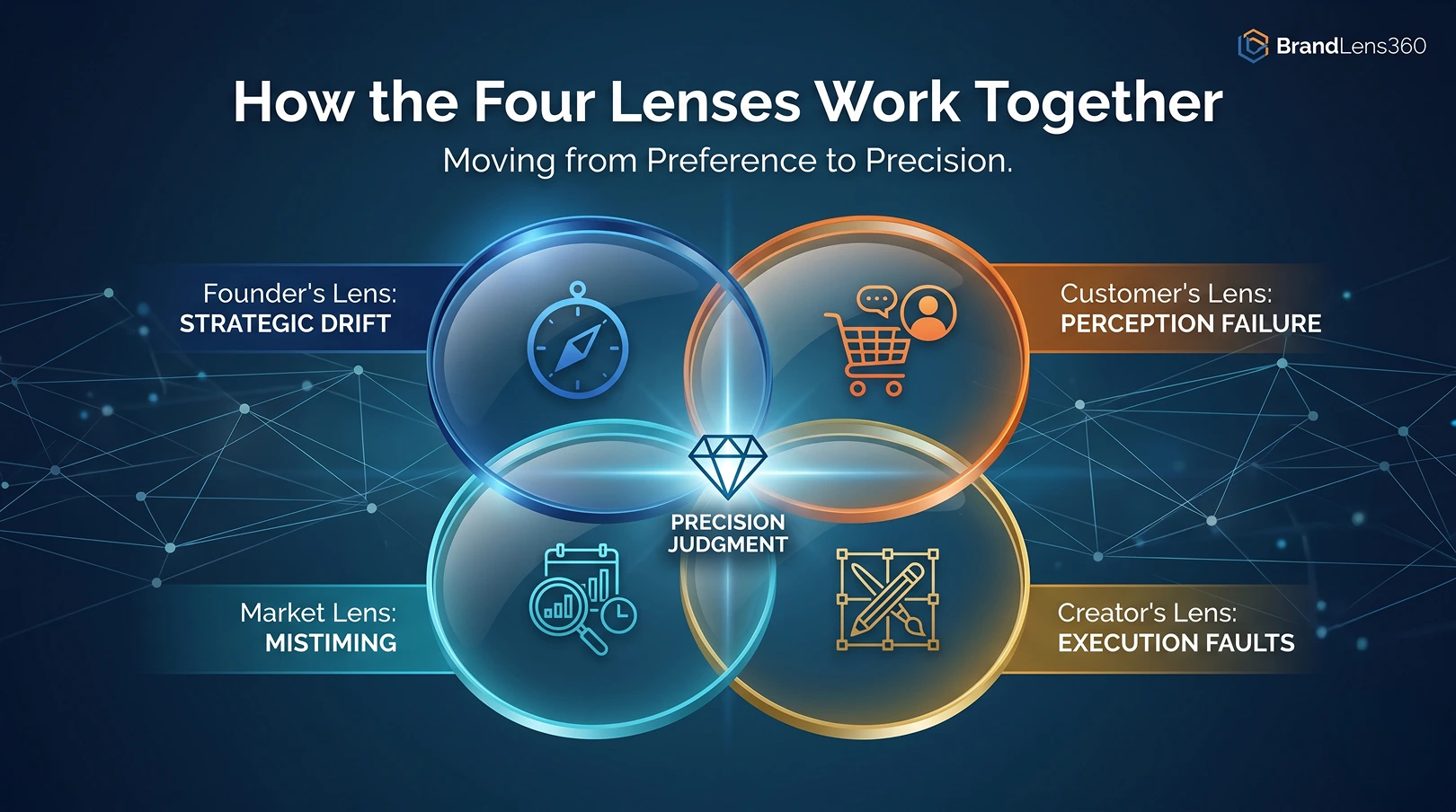
Most Strategic Thinkers develop four habits over time – and each one is learnable.
They ask better questions. They do not accept the brief at face value. They know clients describe symptoms, not root causes. So before starting, they ask: What is really going wrong here? What does the audience currently believe? What do we need them to believe instead?
They measure outcomes, not just outputs. Executors measure success by delivery – the file was sent, the campaign went live, the design was approved. Strategic Thinkers ask what actually changed: did trust improve? Did conversions move? Did the business actually go forward?
They think in systems. No piece of work exists in isolation. A campaign affects the landing page. The landing page affects trust. Trust affects conversions. The product experience affects referrals. Strategic Thinkers ask not just “how do I make this asset better?” but “how does this fit into the larger customer journey?” They take ownership. Executors complete tasks. Strategic Thinkers take responsibility for results. If the subject line is weak, they say so. If the offer is confusing, they raise it. They think like owners, not task-doers – and that is one of the biggest reasons they stand out.
The Skill Nobody Teaches
Here is the uncomfortable truth about most creative education.
Schools teach tools. Internships teach workflows. Agencies teach turnaround time. Nobody teaches diagnosis.
And yet diagnosis is the thing that determines who becomes valuable. Before opening the software and ask: what is the audience currently believing, and what do we need them to believe instead? Nobody teaches you to question whether the brief is solving the right problem. Nobody teaches you to connect a font choice, a colour, a piece of copy – to a specific perception outcome in a specific audience’s mind.
So creative professionals graduate with strong execution skills and almost no diagnostic ability. They enter the industry, execute what they are told, deliver what is asked, and spend years quietly wondering why they are being briefed and not consulted.
The gap is not talent. It is training.
What Changes When You Start Thinking Strategically
The shift from executor to Strategic Thinker is not about doing more work. It is about doing a different kind of thinking before the work starts.
When that shift happens, several things change at once.
You stop defending your creative decisions on aesthetic grounds – “I chose this colour because it feels energetic” – and start defending them on strategic ones – “I chose this colour because it signals the identity shift this audience is looking for at this stage of the journey.”
You stop waiting for feedback to understand whether something worked. You start building in perception checkpoints before the work goes live.
You stop being surprised when good-looking work underperforms. You start diagnosing why, and knowing what to fix.
And perhaps most importantly, you start getting invited into different conversations. Because the people who make decisions about budgets, strategy, and direction are not looking for someone to execute their ideas. They are looking for someone who can help them think.
That is who the Strategic Thinker is. And that is who BRIDGE is designed to build.
How BRIDGE Installs the Habit
BRIDGE is a six-part diagnostic framework. It sits in the space between receiving a brief and beginning execution – and it fills that space with six questions that must be answered before any creative decision is made.
The six dimensions – Baseline Clarity, Relevance Mapping, Identity Signal, Define the Journey, Generate Magnetism, and Evolve the Message – together form a complete perception diagnosis. Each one addresses a different risk point. Each one asks a question that most briefs never raise and most professionals never think to ask.
Used once, BRIDGE improves a single piece of work.
Used consistently, on every project, BRIDGE installs something more significant: the habit of thinking before executing. The instinct to diagnose before designing. The ability to walk into any brief and ask – before touching any tool – what actually needs to change here, and for whom.
That instinct, built over dozens of projects, is what moves a professional from the delivery table to the strategy table.
The Expert Economy
There is a broader shift happening in the industry, and it matters for anyone building a creative career right now.
For most of the last two decades, creative work ran on what you might call the Execution Economy. Value was straightforward: what can you produce, how fast, and how well? The designer who executed better than others earned more.
That economy still exists. But it is becoming a commodity market – and in commodity markets, value compresses.
The Expert Economy runs on different rules. What it rewards is judgment. The ability to look at a brief and understand what is really going on. The ability to make a decision that can be explained and defended. The ability to connect a creative choice to a business outcome.
AI produces outputs. Experts are paid for outcomes.
In a world where execution is becoming cheaper, judgment becomes more valuable. And judgment – the Strategic Layer – is exactly what BRIDGE is designed to develop.
A Different Question to Start With
The shift from executor to Strategic Thinker begins with one habit.
Before your next project – before the software opens, before the first concept is sketched – ask one question:
What does the audience currently believe about this brand, and what do we need them to believe instead?
That question will tell you more about what the work needs to do than the brief itself usually does. It will surface the real problem before you have spent a week solving the wrong one. And it will begin to build the diagnostic instinct that separates the professionals who shape decisions from the ones who only deliver them.
The 95% open the software. The 5% open the problem.
That single shift – practised consistently, on every project – is what separates executors from Strategic Leaders.
BRIDGE is how you make that shift permanent.
Explore the BRIDGE series:
● What Is BRIDGE? A Simple Framework to Make Better Creative Decisions
● Why Most Creative Work Fails – And How BRIDGE Helps You Solve the Right Problem
The Simple Formula to Explain Your Creative Decisions with Confidence
BRIDGE is one of the core frameworks taught at Web D School, Chennai. Read the full introduction here: [What Is BRIDGE? A Simple Framework to Make Better Creative Decisions.]
Available on campus in Chennai and online across India.